100 Years of Modern Korean History: From Japanese Occupation to 2025's Hope for Unification
Modern Korean history spans a turbulent century, from the 1910 Japanese annexation to the present-day aspirations for inter-Korean unity in 2025. Marked by colonial oppression, liberation, division, war, economic miracles, and democratization, this journey reflects the indomitable spirit of the Korean people. This post organizes key events into a detailed timeline, exploring pivotal moments, figures, and their lasting impact.
 |
| 동대문 |
From overcoming colonial rule to becoming a global leader in K-culture and semiconductors, Korea’s story is one of resilience. As of 2025, advancements in inter-Korean relations and digital innovation signal a new chapter.
Dawn of Modern Korea: 1910–1945, Japanese Occupation and Independence Movements
The early 20th century saw Korea fall under Japanese influence after the Sino-Japanese War (1894) and Russo-Japanese War (1904–05).
1910: Japanese Annexation
On August 29, 1910, the Japan-Korea Annexation Treaty forcibly made Korea a Japanese colony.
1919: March 1st Movement
On March 1, 1919, the Declaration of Independence was read in Seoul’s Tapgol Park, sparking the nationwide March 1st Movement.

1920–1930s: Cultural Resistance
The 1920s saw cultural independence movements through newspapers and literature.
1945: Liberation
On August 15, 1945, Japan’s surrender brought Korea’s liberation after 35 years.
Division and War: 1945–1953, Post-Liberation Chaos and the Korean War
1948: Two Koreas Established
On August 15, 1948, the Republic of Korea was established.
1950–1953: Korean War
On June 25, 1950, North Korea’s invasion sparked the Korean War.

Economic Revival and Authoritarian Shadows: 1953–1987, Miracle on the Han and Democratic Struggles
1960s: Park Chung-hee Regime
Following the 1961 May 16 Coup, Park Chung-hee launched the First Five-Year Economic Plan.
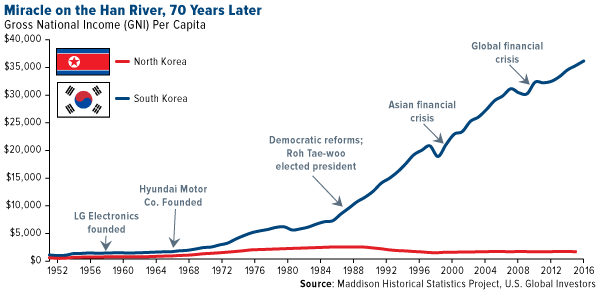
1970s: Miracle on the Han River
The 1970s saw the “Miracle on the Han River” with POSCO’s steel production.
1980s: Gwangju and June Uprising
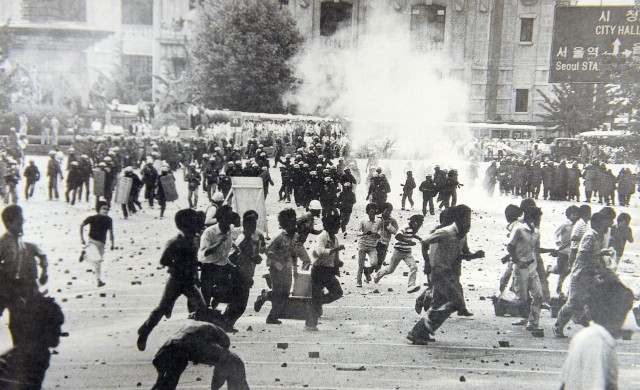
The 1980 Gwangju Uprising resulted in over 200 deaths. The 1987 June Democratic Uprising led to direct elections.
Democratization and Globalization: 1988–2025, K-Wave and Unification Hopes
1990s: IMF Crisis Recovery
The 1997 Asian Financial Crisis hit hard, but structural reforms fueled recovery.
2000s: IT Boom
The 2000s saw an IT boom, with Samsung and LG becoming global brands.
2010–2025: Pandemic and Future
The 2018 PyeongChang Olympics and BTS’s success propelled K-culture. By 2025, Korea is a semiconductor powerhouse.
100-Year Timeline of Modern Korean History
| Year | Event | Key Figures/Impact | Impact |
|---|---|---|---|
| 1910 | Japan-Korea Annexation | Japanese Empire | Start of colonial era |
| 1919 | March 1st Movement | Declaration of Independence | National awakening |
| 1945 | Liberation | U.S.-Soviet Occupation | Seeds of division |
| 1948 | Two Koreas Established | Syngman Rhee, Kim Il-sung | Division solidified |
| 1950–53 | Korean War | Armistice Agreement | 3 million casualties |
| 1961 | May 16 Coup | Park Chung-hee | Economic plans launched |
| 1970s | Miracle on the Han | POSCO founded | GNP grew tenfold |
| 1980 | Gwangju Uprising | Chun Doo-hwan | Spark for democracy |
| 1987 | June Democratic Uprising | Direct elections | Democratic turning point |
| 1997 | IMF Crisis | Structural reforms | Resilience proven |
| 2000 | Inter-Korean Summit | Kim Dae-jung | Sunshine Policy |
| 2018 | Panmunjom Declaration | Moon Jae-in, Kim Jong-un | Peace process |
| 2025 | Digital Powerhouse | Yoon Suk-yeol | Global K-culture |
Impact and Future Outlook of Modern Korean History
Korea’s modern history showcases a model of democracy and prosperity born from struggle. By 2025, Korea ranks among the world’s top 10 economies, but faces challenges like low birth rates and unification.


0 Comments